For years, automakers have been fighting over the same question: Should vehicle interiors rely on touchscreens or physical buttons?
Rivian has a different answer.
Neither.
The electric vehicle manufacturer recently rolled out an upgraded AI-powered voice assistant called Rivian Assistant, and the company believes talking to your vehicle may eventually become the primary way drivers interact with their cars.
That might sound like a bold claim, especially at a time when many consumers are demanding the return of physical buttons. But Rivian’s Chief Software Officer, Wassym Bensaid, says voice technology has finally reached a point where it can do what automakers have been promising for years.
“I deeply believe that voice has the chance to be the primary interface in the car,” Bensaid recently told The Verge. “I also think that buttons can exist, but they shouldn’t be the primary way with which you interact with the car.”
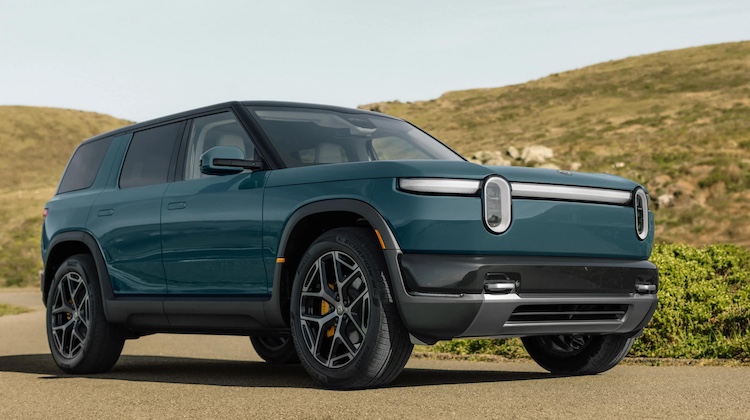
It’s a philosophy that’s already reflected in Rivian’s interiors. The company’s R1 and upcoming R2 vehicles feature remarkably clean cabins with very few physical controls. While that approach isn’t for everyone, Rivian argues that a capable voice assistant can reduce the need for drivers to poke around complicated touchscreen menus while trying to keep their eyes on the road.
“You don’t have to go deep into the touchscreen to look into specific features,” Bensaid said. “A great voice experience can elevate all of that, allow users to talk to the car as a human would, and really take the overall experience to the next level.”
For automotive designers and interior professionals, it’s an interesting shift to watch.
For decades, vehicle interiors have been built around physical interaction. Switches, knobs, buttons, control panels and increasingly large touchscreens have dictated how dashboards and center consoles are designed. If Rivian’s vision becomes reality, future interiors could become even cleaner and more minimalist because many of those controls simply won’t be necessary.
According to Bensaid, the biggest obstacle hasn’t been consumer acceptance. It’s been the technology itself.
“The only reason that drivers and consumers do not interact with the car through voice is that, to put it really bluntly, the technology has been broken,” he said.
In his view, traditional automotive architecture is partly to blame.
Modern vehicles are often made up of hundreds of electronic control units supplied by different vendors, each responsible for a specific function. That can make it difficult to create seamless experiences that connect multiple vehicle systems together.
“In that world, integrating an end-to-end vehicle feature requires a ton of coordination between many of those suppliers,” Bensaid said.
He argues that newer vehicle platforms, particularly those developed by tech-first companies like Rivian, Tesla and some Chinese automakers, are moving toward centralized computing systems that allow software to control more of the vehicle from a single architecture.
For example, a simple voice command to adjust seating might require automated coordination between the seats, safety system, and mirrors to ensure the wellbeing of passengers. That’s easy to do with a centralized computing system. But in older vehicles, where controls are sourced from different suppliers and merged together, coordinating all those functions can become complicated, if not impossible.
“This is why that old model really doesn’t work anymore,” he said.
Whether Rivian’s vision catches on remains to be seen. Many drivers still prefer the simplicity and reliability of physical controls, particularly for frequently used functions.
Still, if Rivian is right, the debate over touchscreens versus buttons may eventually become irrelevant. The next generation of vehicle interiors could be designed around a completely different interface altogether: conversation.
The full interview with Bensaid is worth watching. Even if you don’t agree with his prediction, it offers a fascinating glimpse into how some automakers believe future vehicle interiors will function.
Recent Comments