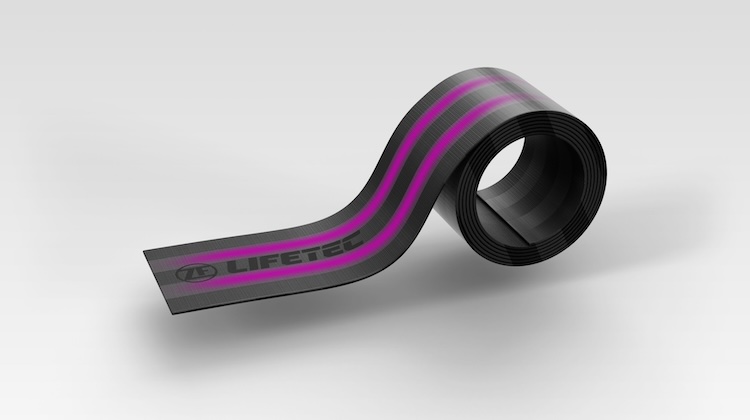
A seat belt can be buckled and still be worn incorrectly. ZF LIFETEC aims to change that using infrared technology.
The company’s all-new Infrared Belt uses specially designed seat belt webbing that can be detected by infrared cameras inside a vehicle. Unlike conventional buckle sensors, which only confirm whether a belt is fastened, the system can track how the belt runs across an occupant’s body.
That means it can potentially identify common forms of seat belt misuse, such as wearing the shoulder belt under an arm or routing it behind the back.
The technology works by incorporating different types of yarn into the seat belt fabric, giving it a distinct infrared signature. Interior cameras can distinguish the webbing from clothing, skin and surrounding surfaces, allowing the vehicle’s occupant monitoring system to determine whether the belt is positioned correctly.
According to ZF LIFETEC, the system is designed to work regardless of cabin lighting conditions and can be used in every seating position, including the rear seats.
“Our new seat belt enables infrared cameras to more accurately identify whether an occupant is optimally protected. By doing so, we create the foundation for higher-quality occupant detection and significantly enhance safety for drivers, front passengers, and rear-seat occupants alike,” Harald Lutz, senior vice president of research and development at ZF LIFETEC, said in a news release.
The development comes as European vehicle safety organizations place greater emphasis on occupant monitoring. Euro NCAP, the European equivalent of the NHTSA, is increasingly looking beyond whether seat belts are buckled and focusing on whether they’re being worn correctly.
Euro NCAP’s Vision 2030 roadmap calls for vehicles to identify improper seat belt use and provide occupants with audible and visual warnings by the year 2030.
European regulators are also driving the adoption of in-cabin monitoring cameras, including systems designed to detect driver fatigue and distraction.
Series production of the Infrared Belt began in August 2026. The technology is intended primarily for automakers addressing evolving European safety requirements, although its potential applications aren’t necessarily limited to that market.
Whether the technology makes its way into American vehicles remains to be seen. The U.S. has no comparable requirement for cameras to verify proper seat belt positioning, so adoption would likely depend on individual automakers seeing enough value in the technology to offer it voluntarily.
Recent Comments