The steering wheel has been round for more than a century, but automakers are starting to give it a makeover.
Meet the squircle: It’s not quite square, not quite circle and definitely not your grandfather’s steering wheel.
Automakers, including Ford and Subaru, are embracing the design, which has a flattened top and bottom and rounded sides.
But this isn’t just about giving cars a futuristic look. The changing shape has a practical purpose. It makes it easier for drivers to see their digital displays and touchscreens without taking their eyes off the road.
Traditionally, the instrument cluster sits directly behind the steering wheel. But some automakers are moving displays higher on the dashboard, closer to the windshield and within the driver’s natural line of sight.
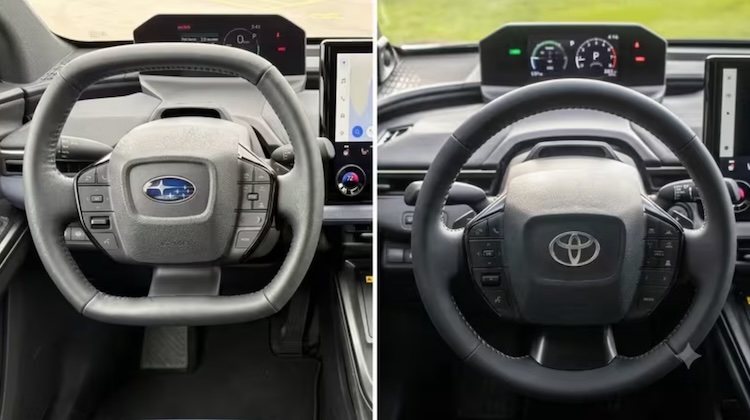
The problem? A conventional steering wheel can obstruct part of those screens.
“With the gauges now above the steering wheel rim, it’s helpful to reshape the steering wheel or make it smaller to make sure the rim doesn’t block the gauges,” Ed Kim, president and chief analyst of AutoPacific, recently told Kelley Blue Book.
The squircle helps solve that problem by lowering the wheel’s profile while maintaining enough of a traditional steering wheel for drivers to grip and turn it normally.
The squircle might look like a steering yoke, but there’s an important difference.
Yokes, which resemble the controls found in aircraft, have been tried in production vehicles. Tesla introduced one on the Model S and Model X Plaid in 2021 before bringing back a conventional round steering wheel as standard equipment. The yoke eventually became an optional upgrade.
The problem was practicality.
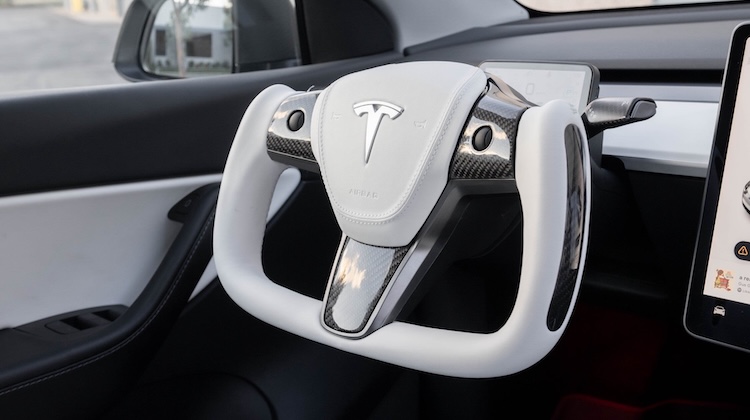
Yokes work well in racing applications, where drivers generally make smaller steering inputs. But everyday driving involves parking, backing up and making tight turns. Without a complete steering wheel, drivers can find themselves reaching for a section of the wheel that isn’t there.
The squircle offers a compromise. Its flattened top and bottom provide better visibility and additional space, while its rounded sides preserve the familiar grip of a conventional wheel.
In other words, drivers can still use traditional hand positions and turn the wheel hand-over-hand when necessary.
Lucid is among the automakers pushing the new shape.
The company’s Gravity SUV features a smaller, squircle-style steering wheel designed around a touchscreen mounted above it. The display provides access to important driving information, while the wheel’s shape helps keep the screen visible.

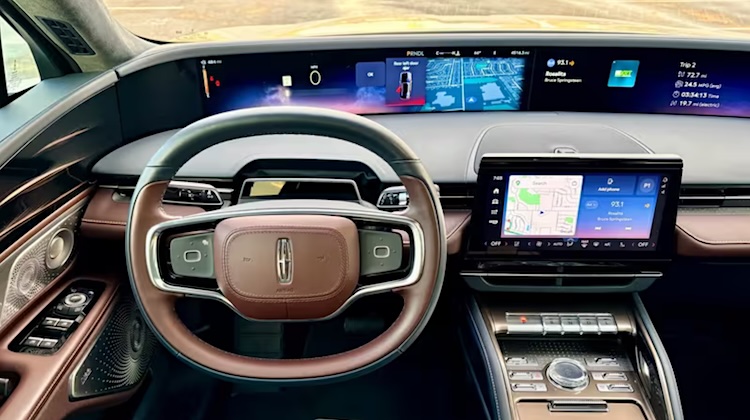
Lincoln and Ford have also adopted variations of the design in vehicles, including the Nautilus, Navigator and Expedition.
Their approach centers on a panoramic display stretching across much of the dashboard, just below the windshield. A flatter steering wheel helps drivers see more of that screen without constantly shifting their gaze.
Of course, drivers accustomed to a traditional round wheel might find the squircle unusual at first. But automotive designers and analysts say most people can get comfortable with it fairly quickly.
There are also differences between manufacturers. Some squircle designs are more pronounced than others, and not every automaker is abandoning the conventional steering wheel.
Still, as digital instrument clusters continue moving higher on dashboards, the squircle could become increasingly common.
Not because it looks good, but because it works.
Recent Comments